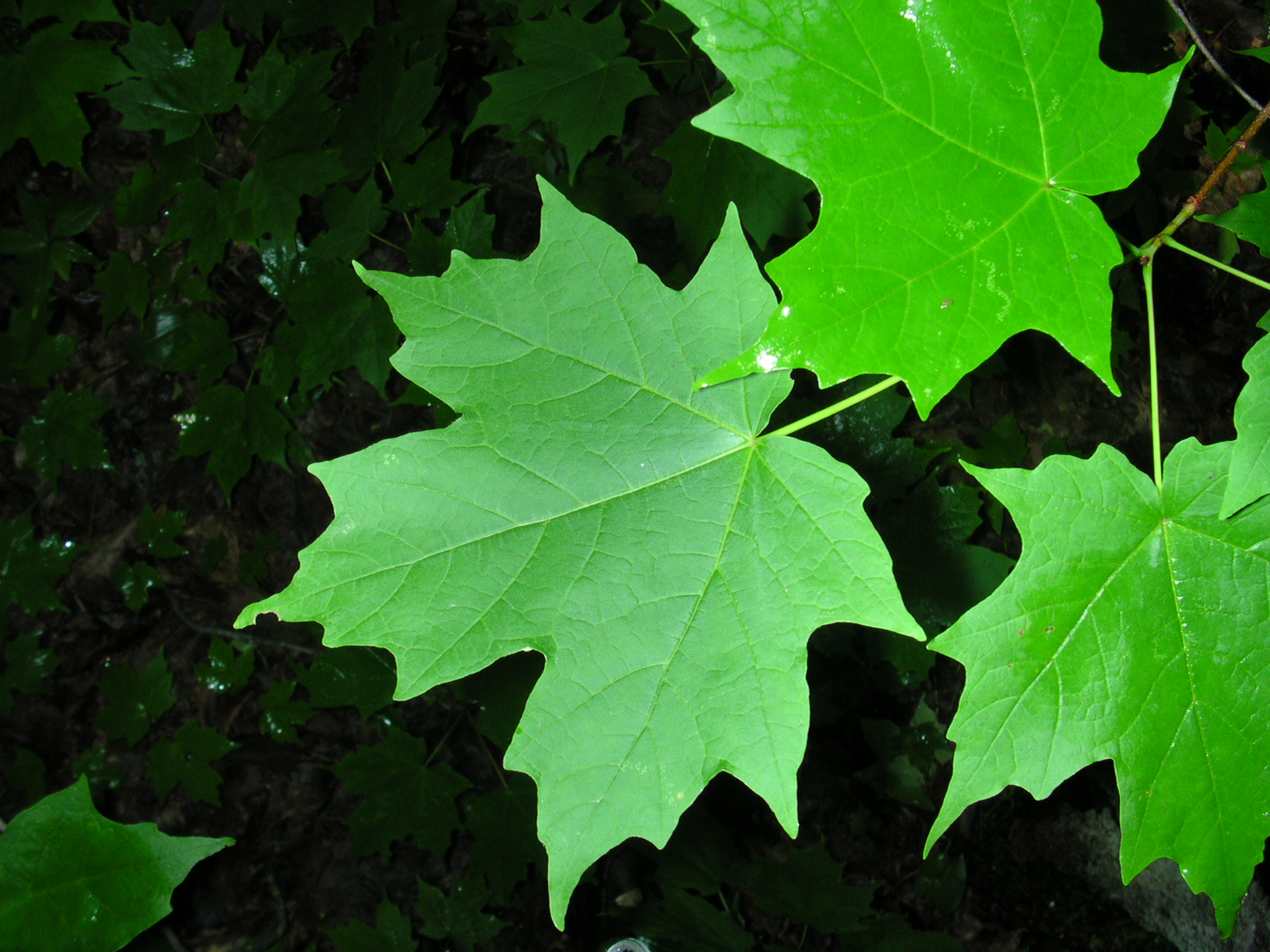
The signature tree of New England fall foliage and the source of all genuine maple syrup. Its sap freeze-thaw cycle (cold nights, warm days in late winter) drives spring sugaring season.
§ Quick facts
§ Encyclopedia
Acer saccharum, the sugar maple, is a species of flowering plant in the soapberry and lychee family Sapindaceae. It is native to the hardwood forests of eastern Canada and the eastern United States. Sugar maple is best known for being the primary source of maple syrup and for its brightly colored autumn foliage. It may also be called "rock maple," "sugar tree," "sweet maple," or, particularly in reference to the wood, "hard maple," "birds-eye maple," or "curly maple," the last two being specially figured lumber.
Source: Wikipedia — Acer saccharum Licensed under CC BY-SA 4.0
§ Identification
Field marks. 5-lobed leaves with smooth U-shaped sinuses; gray-brown bark.
Similar species. Other maple species. Sugar Maple. Black Maple (downy underside leaves).
Voice. N/A
§ Diet & behavior
Diet. N/A — photosynthesis
Behavior. Slow growing. Sap rises in late winter — tapped for maple syrup. Stunning fall foliage.
§ Range
Eastern US and Canada, especially New England, Great Lakes, Appalachians
§ Habitat
Cool, moist forests; deep well-drained soils
§ Threats
Climate-driven range shift northward, acid rain depleting calcium from soils, sapsucker damage, asian longhorned beetle invasion.
§ Conservation status
According to the IUCN Red List, the sugar maple is currently classified as Least Concern.
§ What helps
Reduce coal-derived emissions (acid rain). Support climate action. Buy real maple syrup from sustainable producers.
§ Further reading
- Wikipedia — Acer saccharum
- www.nwf.org — authoritative profile of Acer saccharum
- IUCN Red List · taxon 194021
- iNaturalist · taxon 48641
- GBIF occurrence records
- Encyclopedia of Life — Acer saccharum
§ Sources cited
- USDA Plants Database
- Vermont Center for Ecostudies
- iNaturalist
- IUCN Red List 2017


