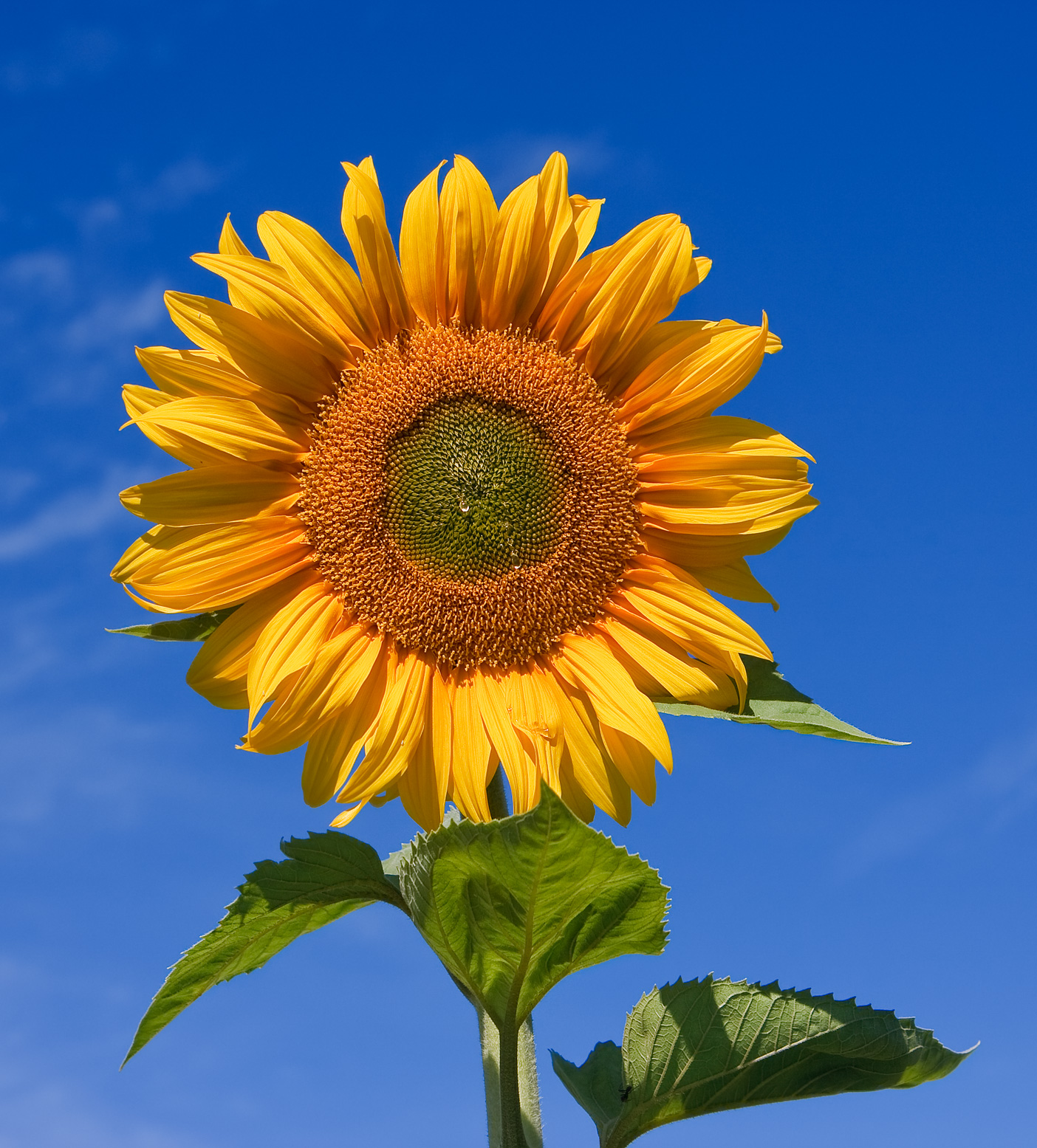
The native ancestor of all cultivated sunflowers — wild plants are branched and multi-headed rather than the giant single-stalked garden form. Critical pollinator and seed-eater plant.
§ Quick facts
§ Encyclopedia
The common sunflower is a large annual forb in the daisy family Asteraceae. The domesticated form of common sunflower is harvested for its edible seeds, which come in two types: oil and confectionary seeds. Oilseed sunflowers are widely grown globally and represent the fourth most used vegetable oil in the world. They also are used widely as bird food or as food for livestock. In contrast, confectionary sunflowers are often eaten as a snack food or in baking. There also are horticultural sunflower varieties that are used as plantings in domestic gardens for aesthetics. Wild plants are known for their multiple flower heads, whereas the domestic sunflower often possesses a single large flower head atop an unbranched stem.
Source: Wikipedia — Common sunflower Licensed under CC BY-SA 4.0
§ Identification
Field marks. Tall annual with rough hairy stems and broad heart-shaped leaves; large yellow ray florets surrounding dark brown disk florets.
Similar species. Other Helianthus species (perennial, different growth habit). Mexican Sunflower (smaller, orange).
Voice. N/A
§ Diet & behavior
Diet. N/A — photosynthesis
Behavior. Domesticated from wild populations in central US by Indigenous peoples ~3,000–5,000 years ago — one of the few crop plants domesticated in North America. Young flowers exhibit heliotropism (tracking the sun); mature flowers fixed facing east. Seeds support goldfinches, chickadees, doves, and many other birds.
§ Range
Across most of North America
§ Habitat
Open fields, prairies, roadsides, gardens
§ Threats
Loss of prairie habitat, herbicide drift, garden monocultures.
§ Conservation status
According to the IUCN Red List, the common sunflower is currently classified as Least Concern.
§ What helps
Plant native sunflowers (not just garden cultivars). Skip herbicides. Leave seedheads standing for finches.
§ Further reading
- Wikipedia — Common sunflower
- www.nwf.org — authoritative profile of Helianthus annuus
- iNaturalist · taxon 53066
- IUCN Red List — search for Helianthus annuus
- GBIF occurrence records
- Encyclopedia of Life — Helianthus annuus
§ Sources cited
- USDA Plants Database
- Lady Bird Johnson Wildflower Center
- archaeological domestication studies


