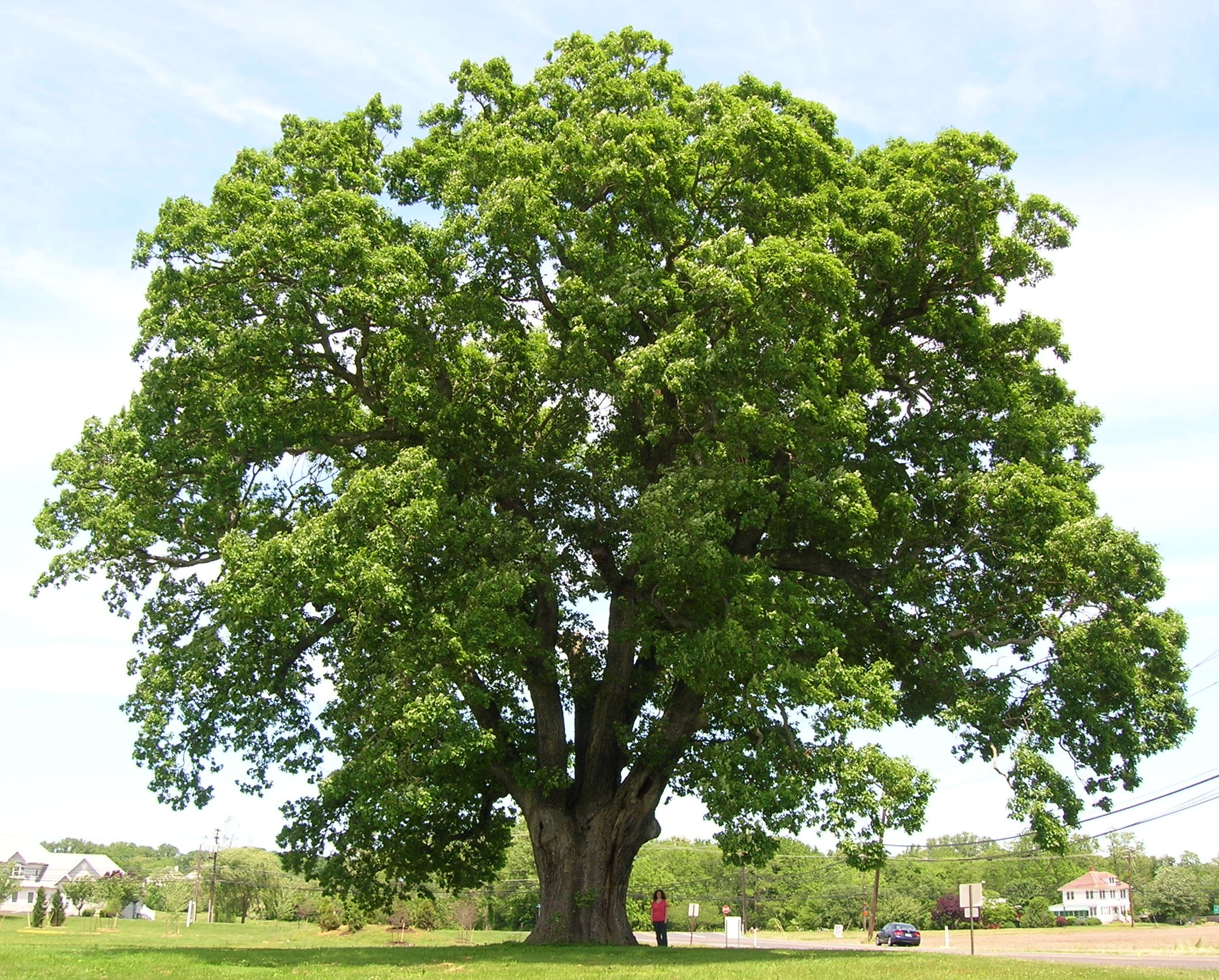
One of the largest and longest-lived eastern hardwoods — verified specimens over 600 years old. White oaks support over 500 caterpillar species, second only to the closely related red oak.
§ Quick facts
§ Encyclopedia
Quercus alba, the white oak, is one of the preeminent hardwoods of eastern and central North America. It is a long-lived oak, native to eastern and central North America and found from Minnesota, Ontario, Quebec, and southern Maine south as far as northern Florida and eastern Texas. Specimens have been documented to be over 450 years old.
Source: Wikipedia — Quercus alba Licensed under CC BY-SA 4.0
§ Identification
Field marks. Pale grayish bark in vertical strips; rounded-lobed leaves; sweet acorns.
Similar species. Other white oaks. Red oak group (pointed lobes).
Voice. N/A
§ Diet & behavior
Diet. N/A — photosynthesis
Behavior. Wind-pollinated. Acorns mature in single season. Masts every 4–10 years.
§ Range
Eastern North America from southern Canada to north Florida
§ Habitat
Deciduous forests, well-drained slopes, suburban yards
§ Threats
Loss of mature trees, oak wilt disease, deer overbrowsing on seedlings.
§ Conservation status
According to the IUCN Red List, the white oak is currently classified as Least Concern.
§ What helps
Plant white oak in yards (large mature trees feed the most wildlife). Support mature oak forest protection. Manage deer numbers.
§ Further reading
- Wikipedia — Quercus alba
- www.nwf.org — authoritative profile of Quercus alba
- iNaturalist · taxon 50819
- IUCN Red List — search for Quercus alba
- GBIF occurrence records
- Encyclopedia of Life — Quercus alba
§ Sources cited
- USDA Plants Database
- Doug Tallamy
- Cornell University
- Audubon Native Plants Database


