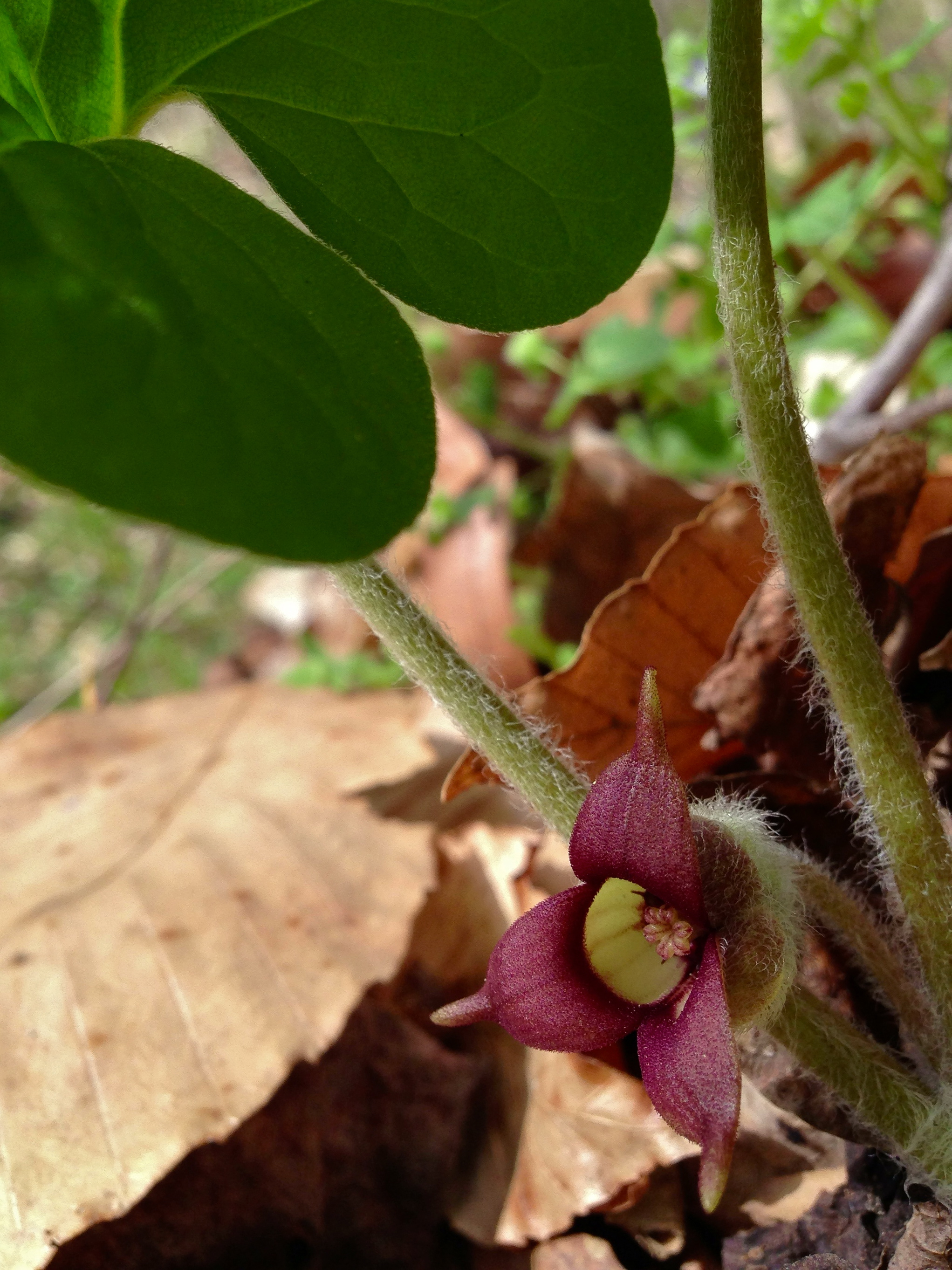
A spring perennial with paired heart-shaped leaves and a deep maroon-brown three-lobed flower hidden at ground level. Pollinated by ground-crawling insects (small flies, beetles).
§ Quick facts
§ Encyclopedia
Asarum canadense, commonly known as Canada wild ginger, Canadian snakeroot, Indian Ginger, Coltsfoot, and Broad-Leaved Asarabacca, is a herbaceous, perennial plant. It should not be confused for Asarum reflexum, a closely related species, or Asarum acuminatum, a variety of A. canadense.
Source: Wikipedia — Asarum canadense Licensed under CC BY-SA 4.0
§ Identification
Field marks. Plant with paired heart-shaped leaves; tiny dark purple-brown flower hidden at base.
Similar species. Other Asarum species (different ranges).
§ Diet & behavior
Diet. N/A — photosynthesis
Behavior. Spring wildflower of eastern woodlands. Native peoples used as a substitute for true ginger (no relation).
§ Range
Eastern North America
§ Habitat
Rich moist deciduous forests
§ Threats
Forest loss, deer overbrowsing, illegal collection.
§ Conservation status
According to the IUCN Red List, the wild ginger is currently classified as Least Concern.
§ What helps
Plant in shade gardens (nursery sources). Don't dig from wild. Support mature forest.
§ Further reading
- Wikipedia — Asarum canadense
- www.nwf.org — authoritative profile of Asarum canadense
- iNaturalist · taxon 75899
- IUCN Red List — search for Asarum canadense
- GBIF occurrence records
- Encyclopedia of Life — Asarum canadense
§ Sources cited
- USDA Plants Database
- Native Plant Trust


