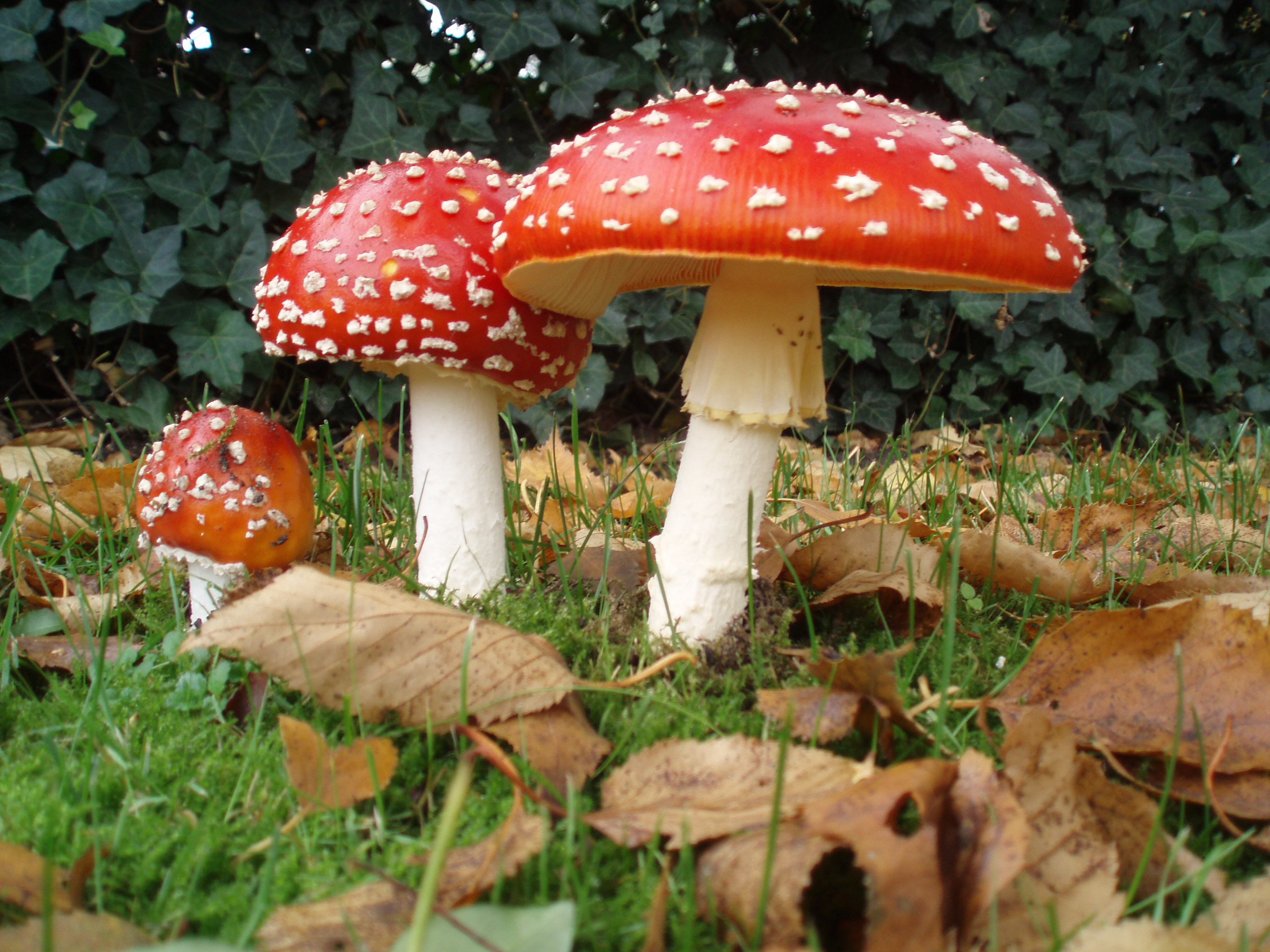
The iconic red-with-white-spots mushroom of fairy tales — toxic and psychoactive, not safely edible. Forms essential mycorrhizal partnerships with northern trees.
§ Quick facts
§ Encyclopedia
Amanita muscaria, commonly known as the fly agaric or fly amanita, is a basidiomycete fungus of the genus Amanita. Its name may come from its historical use to kill flies or from the effects it causes. It is a distinctive, large white-gilled mushroom typically featuring a bright red cap covered with white warts. The complex genetic diversity of A. muscaria suggests that it is a species complex. It is a widely distributed mushroom native to temperate and boreal forests of the Northern Hemisphere, now also naturalised in the Southern Hemisphere, forming symbiotic relationships with various trees and spreading invasively in some regions.
Source: Wikipedia — Amanita muscaria Licensed under CC BY-SA 4.0
§ Identification
Field marks. Bright red or orange-red cap with white wart-like patches (remnants of universal veil); white stem with hanging ring and bulbous base; white gills.
Similar species. Deadly Amanitas (Destroying Angel, Death Cap — entirely white or olive-green caps without warts). Russula species (no warts, no ring, no bulb).
Voice. N/A
§ Diet & behavior
Diet. Mycorrhizal — forms exchange relationships with birch, pine, spruce, and fir roots.
Behavior. Toxic and psychoactive — contains muscimol and ibotenic acid which produce nausea, dizziness, hallucinations, and (rarely) death. Indigenous peoples of Siberia traditionally used it ritually; reindeer also seek it out. The iconic red mushroom of fairy tales, video games (Mario), and the "fly agaric" of folklore — boiled and used as a fly poison in pre-modern Europe. Critical mycorrhizal partner for boreal and northern forest trees; not as dangerous a forager mistake as deadly Amanita species (phalloides, virosa).
§ Range
Across temperate North America
§ Habitat
Mycorrhizal partners with birch, pine, spruce
§ Threats
Mature forest loss reducing mycorrhizal partners, soil disturbance, climate-driven shifts.
§ Conservation status
According to the IUCN Red List, the fly agaric is currently classified as Least Concern.
§ What helps
Don't handle without knowing identification. Don't pick (toxic). Support northern forest protection.
§ Further reading
- Wikipedia — Amanita muscaria
- www.nwf.org — authoritative profile of Amanita muscaria
- iNaturalist · taxon 49158
- IUCN Red List — search for Amanita muscaria
- GBIF occurrence records
- Encyclopedia of Life — Amanita muscaria
§ Sources cited
- North American Mycological Association
- USDA Forest Service mycorrhiza research
- American Association of Poison Control Centers


