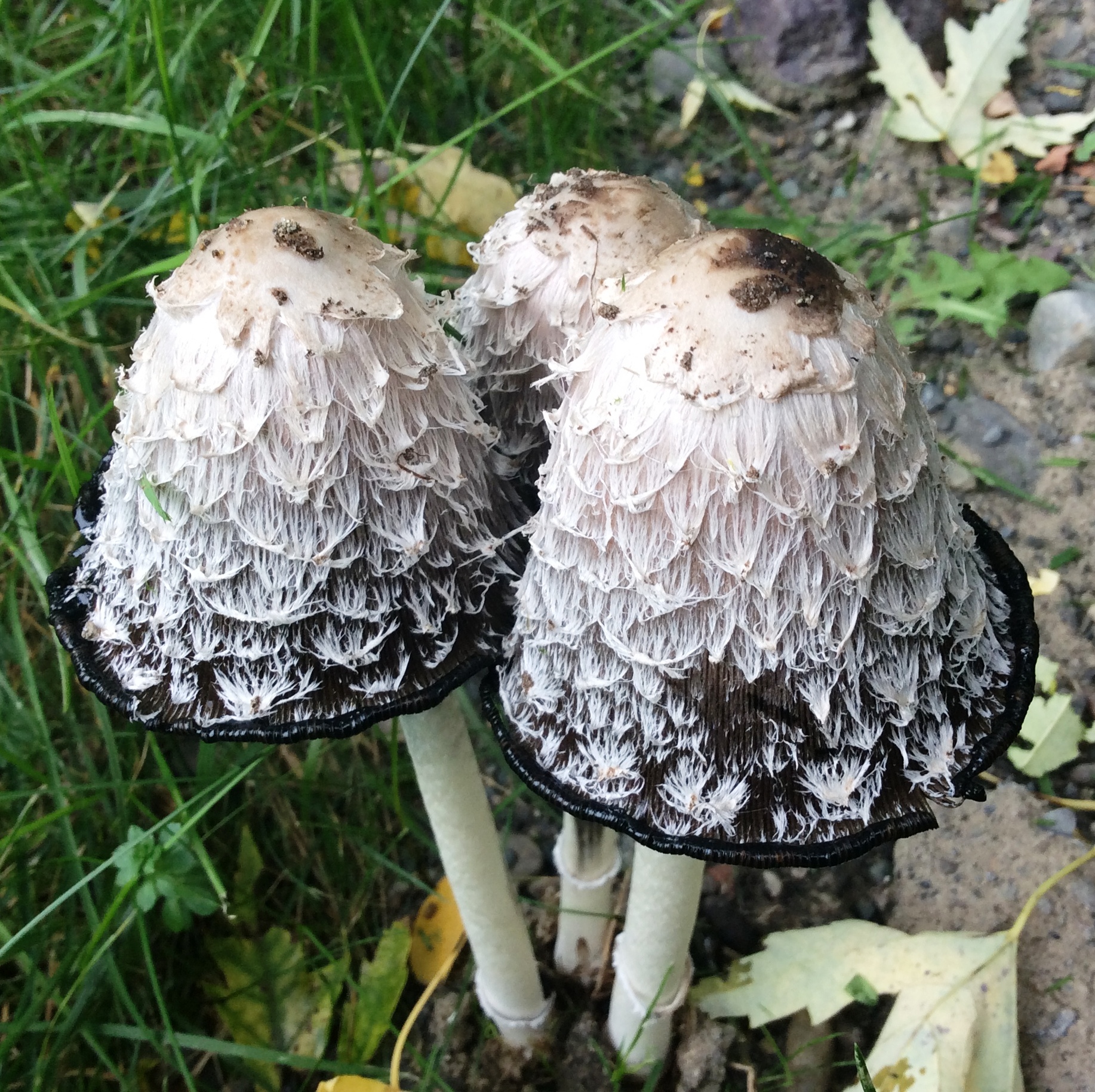
A tall cylindrical mushroom covered in upturned scales (the "shaggy" mane). Edible when young, but liquefies into black ink within hours of harvest — must be cooked the day it's picked.
§ Quick facts
§ Encyclopedia
Coprinus comatus, commonly known as the shaggy ink cap, lawyer's wig, or shaggy mane, is a species of fungus. The young fruit bodies first appear as white cylinders emerging from the ground, then the bell-shaped caps open out. The white caps are covered with scales, the origin of its common names. The gills beneath the cap are white, then pink, then turn black. This mushroom is unusual because it will turn black and dissolve itself in a matter of hours after being picked or depositing spores.
Source: Wikipedia — Coprinus comatus Licensed under CC BY-SA 4.0
§ Identification
Field marks. Cylindrical white mushroom with shaggy upturned scales on the cap; ring around stem; gills white at first, blackening from edges inward; becomes inky black liquid as it matures.
Similar species. Magpie Inky Cap (black-and-white scales). Other Coprinus species (different stature). No dangerous look-alikes when ID is clear.
Voice. N/A
§ Diet & behavior
Diet. Saprotrophic — decomposes plant matter in disturbed soils, lawns, gravel roadsides.
Behavior. One of the most ephemeral edible mushrooms. Pure white cylindrical mushroom transforms into black inky liquid within 24–48 hours of picking ("autolysis" or "deliquescence") — must be cooked the same day or it becomes inedible. The black ink is genuine ink, used for centuries by mapmakers, artists, and scribes; some documents written in shaggy mane ink survive after centuries. Common on disturbed soils, fairways, and gravel paths.
§ Range
Throughout temperate North America
§ Habitat
Disturbed grassy areas: lawns, roadsides, gravel paths
§ Threats
Habitat disturbance, soil compaction, lawn mowing during mature fruiting.
§ Conservation status
According to the IUCN Red List, the shaggy mane is currently classified as Least Concern.
§ What helps
Leave intact during fruiting (autoliquification is part of life cycle). Don't over-collect.
§ Further reading
- Wikipedia — Coprinus comatus
- www.nwf.org — authoritative profile of Coprinus comatus
- iNaturalist · taxon 49001
- IUCN Red List — search for Coprinus comatus
- GBIF occurrence records
- Encyclopedia of Life — Coprinus comatus
§ Sources cited
- North American Mycological Association
- Mycological Society of America
- Cornell Mushroom Blog


