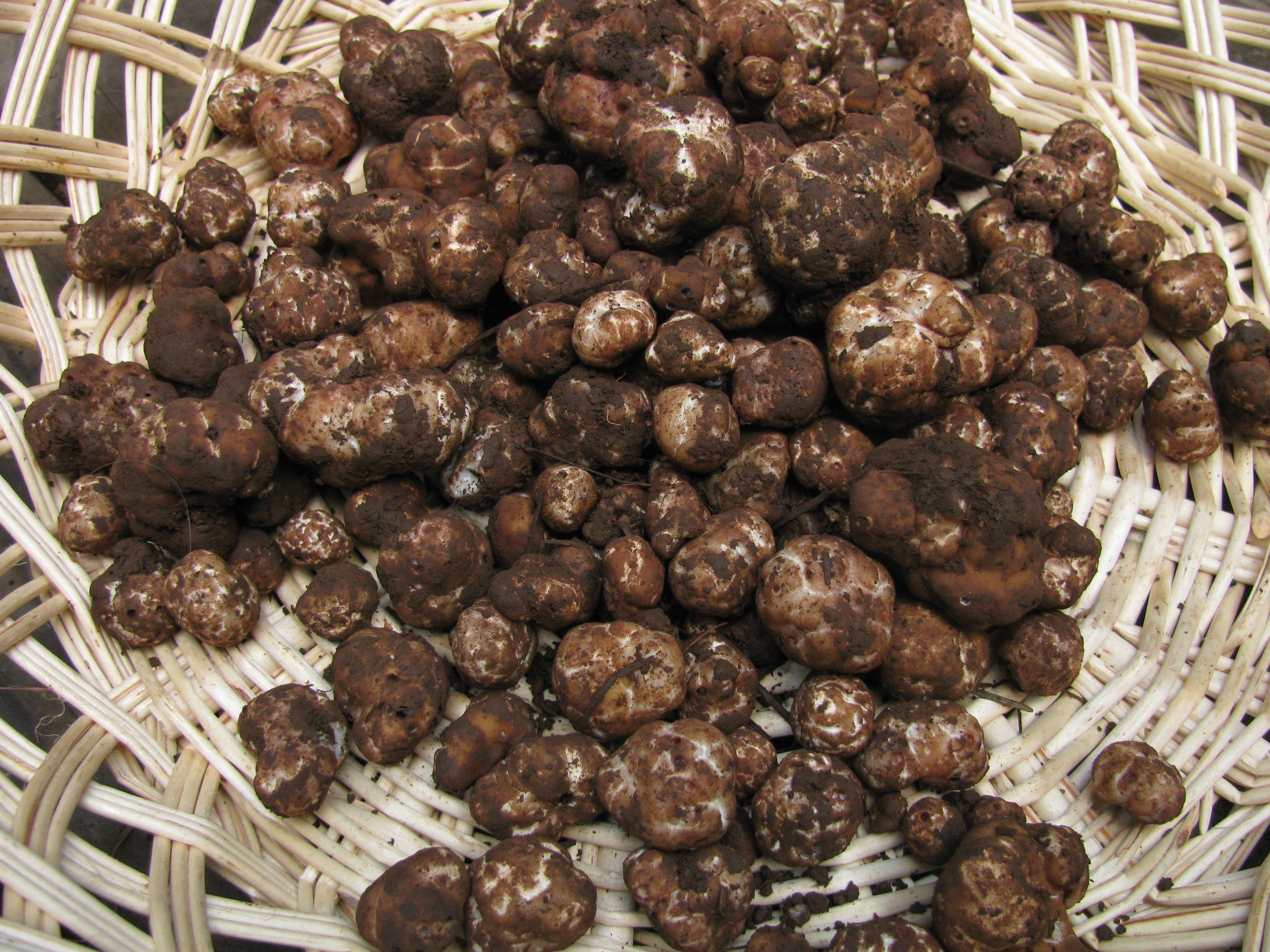
A native truffle of the Pacific Northwest, prized by chefs for its rich aromatic flavor. Forms mycorrhizal partnerships with Douglas-fir roots.
§ Quick facts
§ Encyclopedia
Tuber gibbosum, commonly known as the Oregon white truffle, is a species of truffle in the genus Tuber. It is found in the Pacific Northwest region of the United States, where it often grows with Douglas-fir.
Source: Wikipedia — Tuber gibbosum Licensed under CC BY-SA 4.0
§ Identification
Field marks. Small round whitish-to-pale-tan truffle; smooth or slightly warty surface; marbled white internal flesh; subterranean (no visible above-ground structure).
Similar species. Other Tuber truffle species (different ranges or hosts). European Black Truffle (different range; much rarer). Native truffles often require microscopic examination for ID.
Voice. N/A
§ Diet & behavior
Diet. Mycorrhizal — forms exchange relationships exclusively with Douglas-fir roots.
Behavior. Native Pacific Northwest truffle species, harvested commercially in Oregon. Underground fruiting bodies disperse spores only when uncovered and eaten by small mammals (especially Northern Flying Squirrels, voles, and chipmunks), which excrete intact spores in their droppings — a mutualism critical to Douglas-fir forest health since the mycorrhizal fungi extract phosphorus and water that the trees cannot reach. Aroma compounds attract truffle dogs (specially trained dogs that find truffles by scent).
§ Range
Pacific Northwest
§ Habitat
Under Douglas-fir roots
§ Threats
Conifer forest loss, soil compaction from logging, climate change.
§ Conservation status
According to the IUCN Red List, the western truffle (tuber gibbosum) is currently classified as Least Concern.
§ What helps
Support old-growth Douglas-fir forests. Buy ethically sourced truffles. Don't dig up mycelial mats.
§ Further reading
- Wikipedia — Tuber gibbosum
- www.nwf.org — authoritative profile of Tuber gibbosum
- iNaturalist · taxon 482049
- IUCN Red List — search for Tuber gibbosum
- GBIF occurrence records
- Encyclopedia of Life — Tuber gibbosum
§ Sources cited
- North American Truffling Society
- Oregon State University Pacific Northwest Mycology Lab
- USDA Forest Service


